
Techniques in Protecting AI-Related Inventions in the Philippines
Understanding the Patentability Requirements, Examination Guidelines, and Strategies for Securing Intellectual Property Rights in Artificial Intelligence Technologies
Introduction
Artificial Intelligence (AI) is rapidly transforming the way businesses operate, industries manufacture products, scientists conduct research, and engineers develop technological solutions. From machine learning and neural networks to robotics, predictive analytics, and generative AI, these emerging technologies are creating new opportunities for innovation. As AI continues to evolve, an important question confronts inventors, technology companies, research institutions, and intellectual property practitioners: How can AI-related inventions be effectively protected under Philippine patent law? Not every invention involving AI is automatically entitled to patent protection. The challenge is to distinguish a genuine technological innovation from an abstract idea, mathematical method, business concept, or computer program that may fall outside the scope of patentable subject matter. The Intellectual Property Office of the Philippines (IPOPHL) has addressed these challenges through its Examination Guidelines of Inventions, Utility Model, and Industrial Design Applications Relating to Artificial Intelligence, dated July 2025. These guidelines supplement existing examination materials and provide guidance on issues such as inventorship, patentability, disclosure, enablement, and claim clarity. This article discusses practical techniques and considerations in protecting AI-related inventions in the Philippines.
I. The Legal Framework for Protecting AI-Related Inventions
The principal legal basis for patent protection in the Philippines is Republic Act No. 8293, otherwise known as the Intellectual Property Code of the Philippines, as amended. Under Section 21, an invention may be patentable if it is a technical solution to a problem in any field of human activity, provided that it is new, involves an inventive step, and is industrially applicable. Novelty. The invention must be new and must not form part of the prior art before the relevant filing or priority date. Inventive step. The invention must not be obvious to a person skilled in the relevant art, taking the prior art into consideration. Industrial applicability. The invention must be capable of being produced and used in any industry. Section 22.2 excludes computer programs from patent protection when claimed as such. This is particularly relevant because AI technologies may involve algorithms, mathematical models, software instructions, and data-processing techniques. An invention does not become unpatentable merely because it incorporates software or AI. The critical inquiry is whether the claimed subject matter, considered as a whole, provides a technical solution and possesses the required technical character, while satisfying all statutory requirements.
II. Identifying the Patentable Technical Contribution
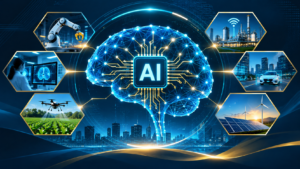
A central drafting task is to identify the actual technical contribution rather than merely describing the invention as an “AI-powered system.” For example, a claim directed simply to an AI system for predicting equipment failure may encounter objections if it only applies a known algorithm to a general predictive function. A system combining a particular sensor configuration, a specially developed machine-learning architecture, and a new data-processing mechanism that improves machine-failure prediction may present a stronger basis for protection. The applicant should explain the technical problem, the features distinguishing the invention from existing technologies, how the AI model operates within the claimed system or process, how the technical components interact, and what technical effect results. Potential examples, subject always to novelty, inventive step, industrial applicability, and sufficient disclosure, include AI-based predictive maintenance systems; AI medical-imaging technologies that improve image acquisition or processing; AI-controlled robotics; improvements in neural-network architecture or model optimization; and AI applications in agricultural monitoring and equipment operation. The essential consideration is that the claimed invention must provide a concrete technical contribution, not merely substitute AI for ordinary human decision-making.
III. Determining Inventorship: Can AI Be Named as an Inventor?
AI systems can generate technical suggestions, product configurations, computer code, and potential solutions. This raises the question whether an AI system may be identified as an inventor in a Philippine patent application. The IPOPHL’s July 2025 AI Examination Guidelines take the position that an AI system cannot be named as an inventor, maker, or designer. The guidelines recognize AI as a tool that may assist human inventors. Where AI is used in developing an invention, the human contribution must be carefully investigated. The patent practitioner should ask who identified the technical problem, who conceived or developed the technical solution, what role AI played, who selected or modified the AI-generated output, and who determined how the resulting invention would be implemented. A prompt or instruction, standing alone, should not automatically be treated as conclusive proof of inventorship. The actual contribution to the inventive concept must be evaluated on the facts. Inventorship must also be distinguished from ownership. A company may own or acquire patent rights through applicable employment arrangements, assignment, or other lawful means, but the actual human inventor must be correctly identified. Applicants should maintain appropriate development records, including laboratory notes, design documents, technical correspondence, and records of AI-assisted research and development.
IV. Applying the IPOPHL Examination Guidelines
The July 2025 guidelines provide a more specific framework for examining AI-related inventions. They supplement the Revised Manual for Patent Examination Procedure and the examination guidelines for Information and Communications Technology and Computer-Implemented Inventions. The examination considers, among other matters, whether the claim falls within a statutory class of invention, whether it involves non-technical subject matter, and whether it possesses technical character. A mathematical formula standing alone is generally not patentable. A business method merely implemented through an AI application may be excluded. A computer program claimed as such is excluded. By contrast, an AI-based system that technically improves the operation of a machine or industrial process may qualify for patent protection if all requirements are met. For product claims, tangible technical features and their real-world implementation may be relevant to technical character. For process claims, the guidelines emphasize implementation through a machine or appropriate technical means. The claims should not merely state an abstract concept or desired result.
V. Techniques in Preparing the Patent Specification
AI patent applications can involve complex algorithms, model architectures, training datasets, computational processes, and software-hardware interactions. The specification must disclose the invention clearly and completely enough to enable a person skilled in the art to carry it out without undue burden. Core AI technologies. These are inventions that advance AI technology itself, such as new neural-network architectures, machine-learning algorithms, model-training techniques, optimization methods, or techniques that reduce computational requirements. The specification should describe the relevant architecture, model configuration, training methodology, computational processes, and implementation details needed to reproduce the claimed contribution. Applied AI technologies. These apply existing AI technologies to solve technical problems in a particular field, such as manufacturing, agriculture, telecommunications, transportation, medical equipment, or industrial automation. The application should identify the technical field and problem, explain the AI model and its integration with other system components, describe the relevant input data and processing, and demonstrate the resulting technical effect. Training datasets. The applicant should describe relevant characteristics of the training data, including its nature, type, quality, quantity or scope, and relationship to the claimed technical effect. The actual dataset need not necessarily be reproduced in the specification, but its relevant characteristics must be disclosed in sufficient detail where they are material to carrying out the invention. Working examples and technical evidence. Actual working examples, experimental results, sample inputs and outputs, benchmarks, testing conditions, and validation results can help demonstrate the technical operation and effect of the invention. Hypothetical examples should be clearly distinguished from work actually performed. Applicants should not present predicted or AI-generated results as actual experiments.
VI. Effective Patent Claim Drafting
The claims define the scope of protection sought. A common weakness is to claim an invention too broadly by merely stating that an AI system is configured to perform a particular function. For an applied AI invention, an independent system claim may identify: (1) a sensor configured to acquire specified technical data; (2) a data-processing unit configured to preprocess that data; (3) a trained machine-learning model configured to process the preprocessed data; (4) a processing unit configured to generate a prediction based on the model output; and (5) a control unit configured to adjust a machine operating parameter in response to the prediction. Dependent claims may further define the sensor configuration, preprocessing method, model architecture, training parameters, feature extraction technique, hardware configuration, and control mechanism. Method claims and computer-readable-medium claims may also be considered where appropriate and properly supported. All claims must be clear, consistent with the description, and directed to the actual technical contribution rather than merely reciting the use of an AI algorithm.
VII. Prior-Art Searches and Inventive Step
AI-related prior art may use terminology different from that used by the applicant. An invention described as an “AI-based predictive maintenance system” may have related disclosures under machine-learning-based fault detection, neural-network predictive control, intelligent sensor analytics, or automated equipment failure prediction. Searches should therefore cover the underlying technical problem, functions, components, processes, and relevant terminology. Useful resources include IPOPHL Patent Search, WIPO PATENTSCOPE, the European Patent Office’s Espacenet, Google Patents, and the patent databases of other relevant jurisdictions. In assessing inventive step, the question is whether the claimed technical solution would have been obvious to a person skilled in the art in view of the prior art. Merely applying a known AI algorithm to an existing process may not establish an inventive step. A particular combination of technical features, a novel model configuration, or a new method of processing technical data may support an inventive contribution if it is not obvious from the prior art.
VIII. Responding to IPOPHL Examination Objections
Applicants should anticipate objections concerning excluded subject matter, technical character, inventive step, clarity, and sufficiency of disclosure. Computer program per se. Explain the claimed technical implementation, the relevant technical components, and the technical effect. Do not rely solely on labels such as “AI-powered” or “intelligent.” Lack of inventive step. Identify the distinguishing features over the cited prior art and explain why the claimed combination would not have been obvious to a person skilled in the art. Address the asserted technical effect with support from the application as filed. Insufficient disclosure. Direct the examiner to the portions of the original specification describing the model architecture, training methodology, data processing, implementation, and examples. Lack of clarity. Define specialized AI terminology and ensure that the claims identify the technical components, functions, and relationships with precision. Amendments must remain within the disclosure of the application as originally filed. New technical information should not be introduced during prosecution to cure an originally inadequate disclosure. This makes thorough preparation before filing especially important.
IX. Other Intellectual Property Considerations
Patent protection is not the only IP issue associated with AI technologies. Copyright. Source code, software documentation, and other original works may qualify for copyright protection. Ownership and permissible use of training materials and AI-generated outputs should be assessed separately under applicable law. Trade secrets. Confidential datasets, proprietary model parameters, algorithms, and processes may be candidates for trade secret protection where the legal requirements are met and reasonable steps are taken to maintain secrecy. Data privacy. Where personal information is used for training or testing AI systems, compliance with Republic Act No. 10173, the Data Privacy Act of 2012, and its implementing rules should be considered. Ownership of employee-developed inventions. Companies and research institutions should establish clear contractual arrangements concerning inventions developed by employees, consultants, and research personnel. Technology transfer and licensing. Collaboration among universities, research institutions, startups, and commercial enterprises should be supported by clear arrangements governing ownership, access, licensing, and commercialization.
X. Practical Recommendations for Inventors and Patent Practitioners
A sound AI patent strategy begins before the application is drafted. First, conduct a thorough technical interview. Understand the invention, the technical problem, the AI technology employed, and the human contribution. Second, classify the invention. Determine whether it concerns core AI technology or the application of AI to a technical field. This helps identify the appropriate disclosure focus. Third, obtain complete technical documentation. Request system diagrams, flowcharts, model architecture, training methodology, sample data, experimental results, and implementation details. Fourth, conduct a comprehensive prior-art search. Search beyond AI terminology and investigate the underlying technical problem, components, and processes. Fifth, draft claims around the technical contribution. Avoid overly broad functional claims that merely state what the AI system is intended to accomplish. Sixth, verify inventorship and ownership. Identify the human inventor or inventors and establish the applicant’s entitlement to the patent. Seventh, consider an international filing strategy. Where foreign markets are commercially important, evaluate the Patent Cooperation Treaty route and the appropriate national or regional filings.
XI. Opportunities for Filipino Inventors and Technology Enterprises
The increasing use of AI across industries presents significant opportunities for Filipino inventors, engineers, scientists, universities, and technology startups. AI-related innovations are no longer confined to software companies. They are increasingly developed in mechanical engineering, electronics, manufacturing, agriculture, healthcare, telecommunications, transportation, and other fields. Filipino inventors should document their technical innovations and consider appropriate IP protection at an early stage. Universities and research institutions should strengthen technology-transfer and patent-commercialization programs so that valuable research outputs can be protected and developed into commercially viable products and services. Patent practitioners have an important role in this process. They must combine legal expertise with a sound understanding of the technical aspects of the inventions presented to them. This calls for close collaboration among patent attorneys, engineers, computer scientists, researchers, and other technical professionals.
Conclusion
Artificial Intelligence is creating new dimensions of technological innovation while presenting new challenges to the traditional principles of patent protection. The IPOPHL’s July 2025 Examination Guidelines for AI-Related Applications are an important development in the Philippine patent system. They provide guidance on issues that include inventorship, patentability, disclosure, enablement, and claim clarity. Obtaining patent protection for an AI-related invention requires more than showing that an AI model or algorithm has been used. The applicant must establish a genuine technical contribution, satisfy novelty, inventive step, and industrial applicability, correctly identify the human inventor, and disclose the invention sufficiently for a person skilled in the art to carry it out. For Filipino inventors and technology enterprises, innovation in Artificial Intelligence should be accompanied by a sound intellectual property protection strategy. For patent practitioners, the challenge is to combine legal expertise with a thorough understanding of emerging technologies in order to secure meaningful patent protection for genuine technological advancements.
- IPOPHL – Patent Procedure & Examination Guidelines (includes the AI Examination Guidelines).
- Intellectual Property Office of the Philippines.
- WIPO PATENTSCOPE.
This article is intended for general legal and informational purposes and should not be considered a substitute for legal advice on a particular invention or patent application. The applicable laws, rules, examination guidelines, and relevant IPOPHL issuances should be consulted in evaluating each application.


